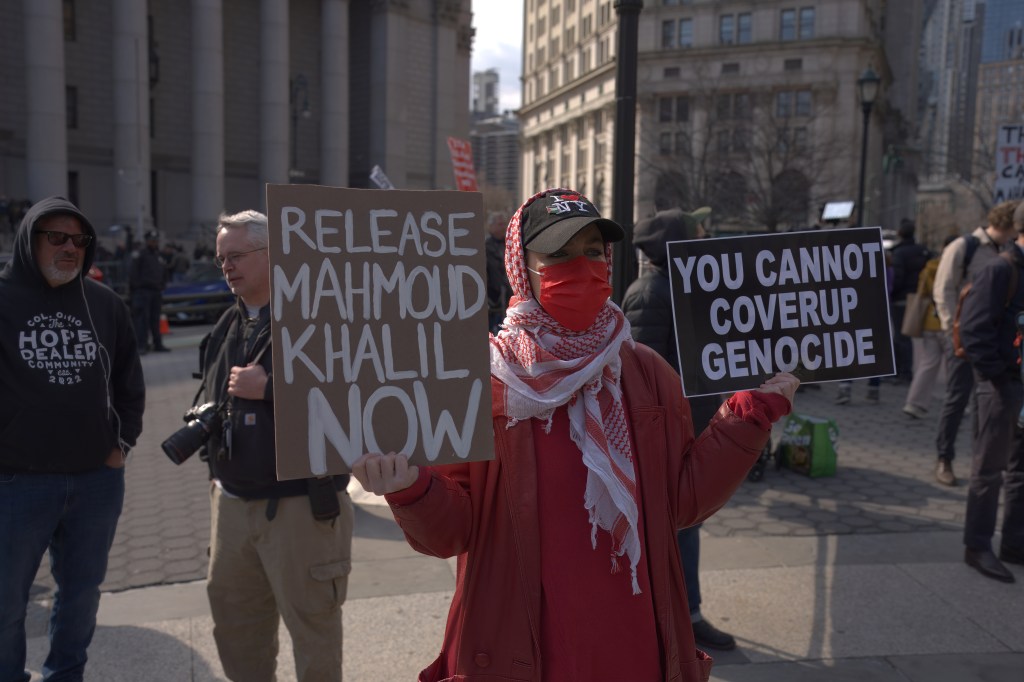
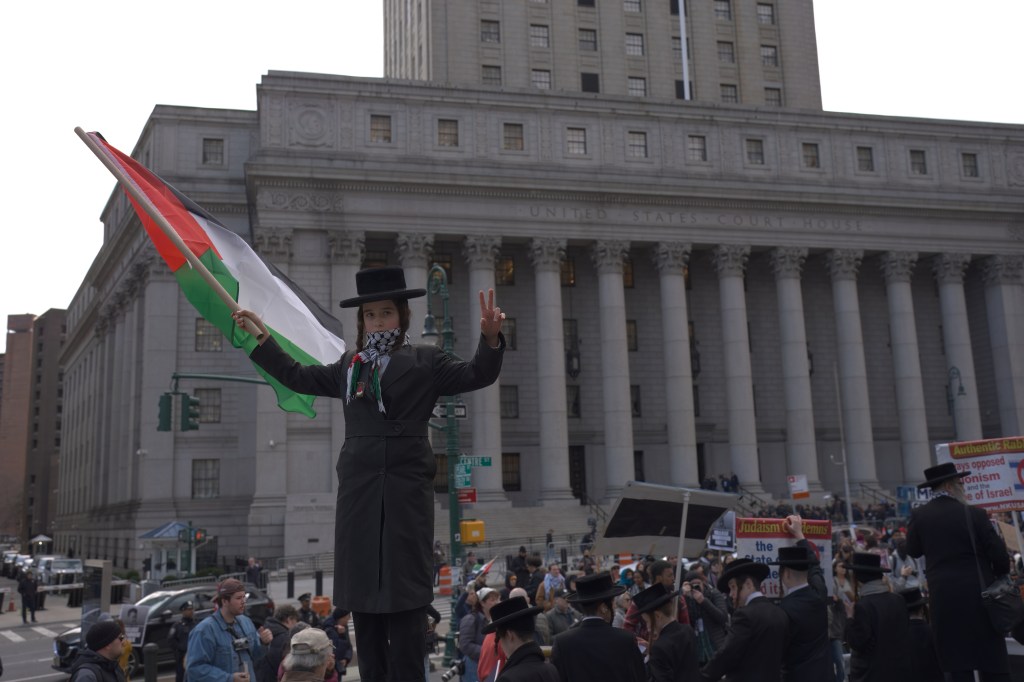
Manhattan, March 12, 2025 — Foley Square, a historic crucible of democratic ideals and public dissent in Lower Manhattan, vibrated with an electric tension today. Hundreds, then thousands, converged upon the federal courthouse at 40 Centre Street, their collective voice rising in an urgent, unyielding cry for justice and, more fundamentally, for the sanctity of free speech in America. At the heart of this volatile gathering was the fate of Mahmoud Khalil, the Palestinian Columbia University student leader, now held in ICE custody on orders from the Trump Administration.
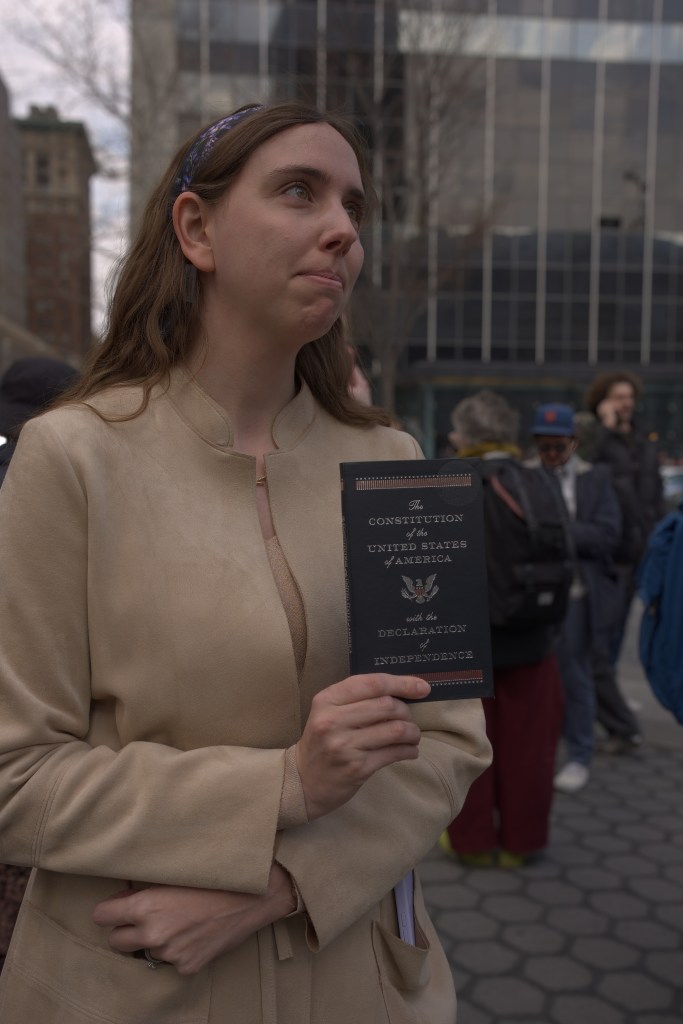
The morning began with a chaotic surge. As supporters and journalists, myself included, vied for entry to what many believed would be a decisive hearing, an unsettling tableau unfolded. Some protestors, fiercely protective, actively sought to shield a female supporter from my colleagues’ cameras, using scarves, umbrellas, and even bare hands. This act, while challenging for photographers, underscored the deep-seated mistrust and heightened emotions swirling around this case – a grim testament to the stakes involved.
Khalil, and said
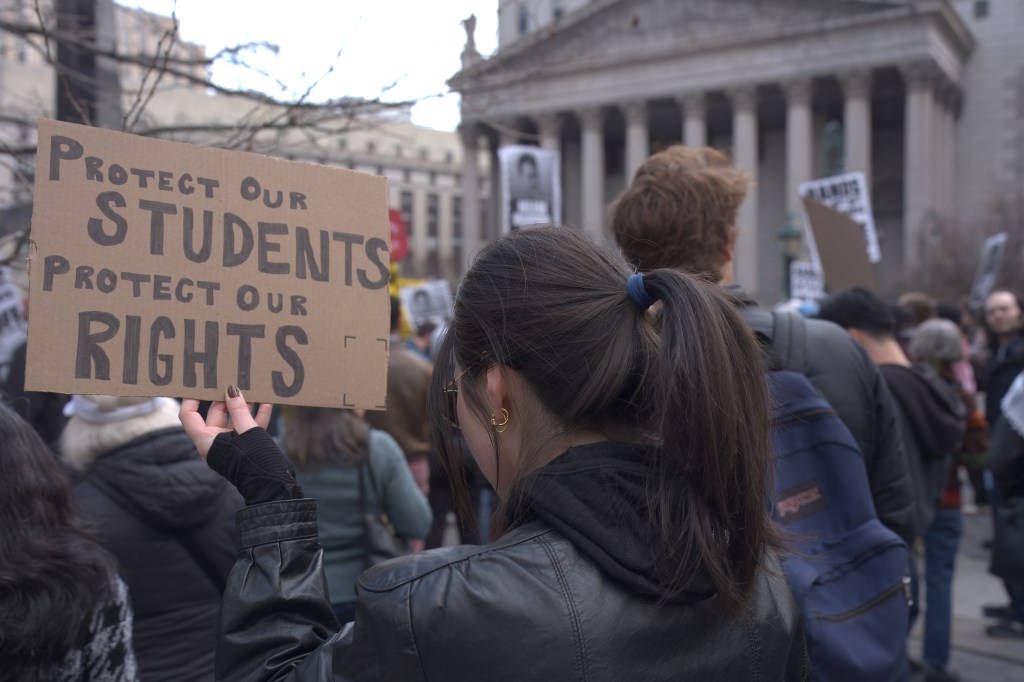
The outrage felt by those gathered echoed loudly in the square. Actress Susan Sarandon, a prominent figure among the protestors, articulated the core concern with stark clarity: “Freedom of speech is something that affects all of us… it is a right that we all have, and this is a turning point in this history and freedom of this country.” Her words, amplified by the sea of New Yorkers, underscored the chilling precedent many believe this case sets. This isn’t just about Mahmoud Khalil; it’s about the very fabric of American constitutional liberties.
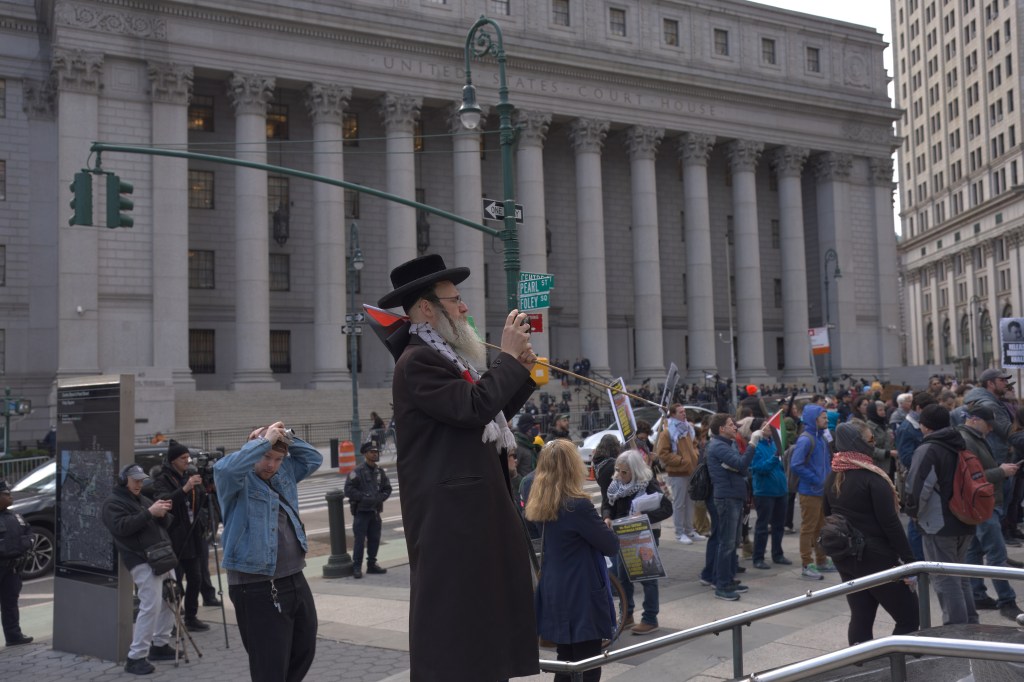
Khalil’s legal team painted a picture of a “police-state kidnapping.” Agents broke into his home on March 8th, refusing to show a warrant to his eight-months-pregnant spouse, a U.S. citizen. They then withheld information about his whereabouts, with Khalil now believed to be detained hundreds of miles away in Louisiana. Ramzi Kassem, a member of his defense team, declared the situation “nothing short of extraordinary and shocking and outrageous,” lamenting that “Every day that Mahmoud spends in detention in Louisiana is a day too long.”
The hearing itself brought little immediate solace. Federal Judge Jesse Furman ruled to block any deportation efforts for now, pending further court appearances, but Khalil will remain in ICE custody. His attorneys are fiercely petitioning for his return to New York, arguing that his actions are unequivocally protected under the First Amendment and that his detainment is solely a politically motivated targeting of his speech. “The United States government has taken the position that it can arrest, detain and seek to deport a lawful permanent resident exclusively because of his peaceful, constitutionally protected activism,” stated Baher Azmy.
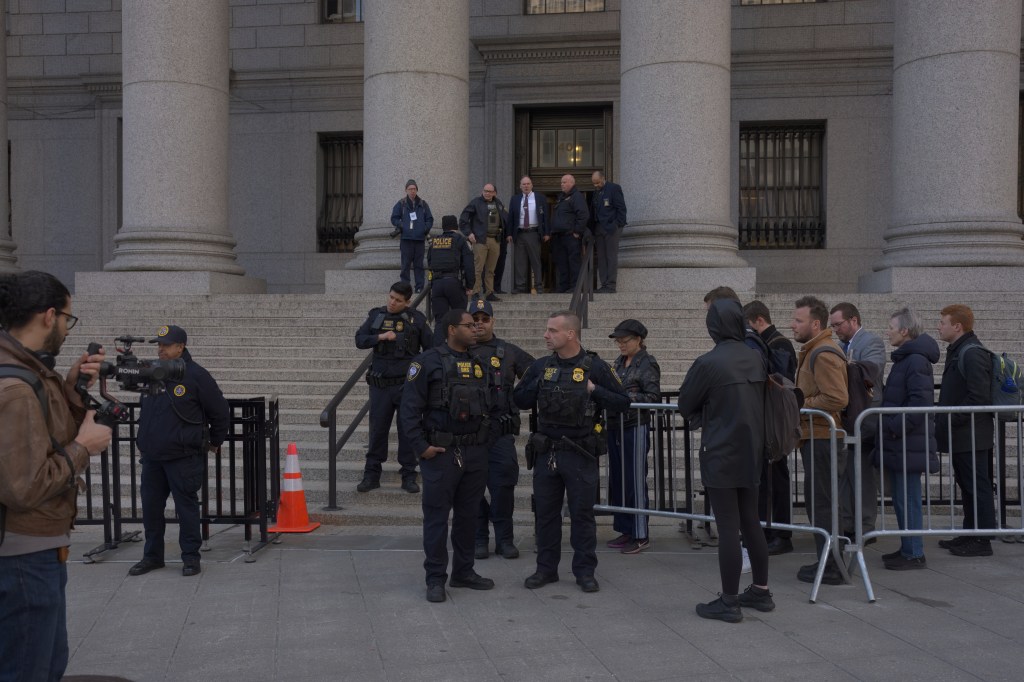
While the vast majority of the protest remained peaceful, a brief, stark reminder of the country’s deep divisions materialized. One man was arrested after confronting an agitator waving a Trump flag directly in the faces of protestors, seizing and throwing his hat. This isolated incident, swiftly contained, highlighted the underlying tensions and the constant provocations that often accompany such demonstrations.
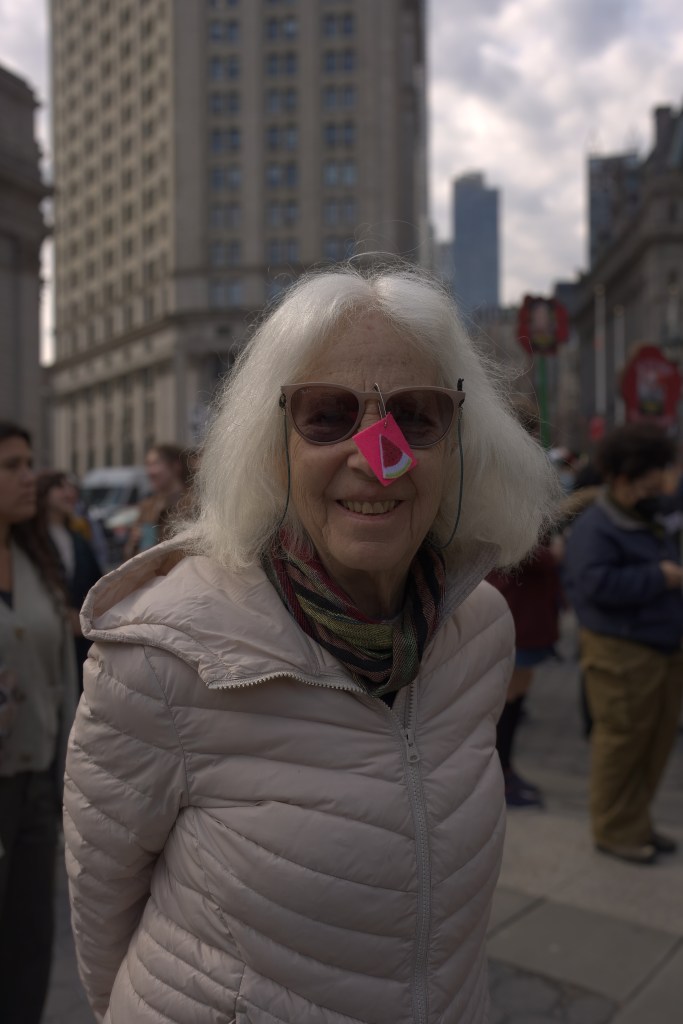
As the sun began to set over Foley Square, the chants continued, a steady rhythm against the city’s hum. This protest, by “thousands” as some outlets reported, perhaps did not boast the historical scale of a Women’s March, a point often debated online regarding American protests. Yet, its significance cannot be overstated. In a climate where media coverage of dissent is often critiqued as sparse or suppressed, every voice, every sign, every determined face becomes a vital act of witness. It’s a powerful, tangible assertion that resistance to perceived government overreach and the erosion of fundamental rights is not only alive but actively fighting in the streets and in the courts. The fight to “bring Mahmoud home” is inextricably linked to the fight for the future of free expression in America.
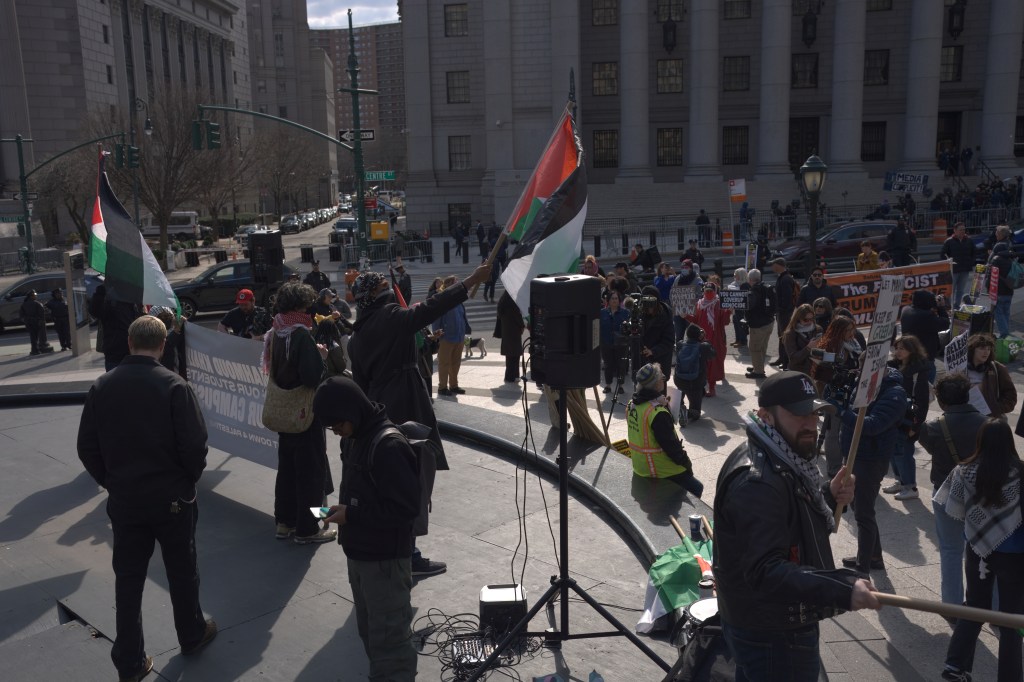
What are your thoughts on the implications of this case for free speech? How do you believe the media should cover protests in this charged political climate? Share your insights in the comments below.

Leave a comment